Morgans Hotel Group

Home Reservations Hotels Meetings & Events Play Special Offers Contact Us Sign Up EmploymentAbout Us


Telegraph Magazine | September 11, 1999

OVERNIGHT SENSATION


Whether they are in New York, Miami or Hollywood, the film and fashion crowd rarely leave the psychic womb of 's hotels. Charles Laurence met him as he opened his new London outpost.

  • By Charles Laurence

You probably wouldn't spot in the crowded bar of one of his hotels. He is the lean but big shouldered guy with sharp eyes set behind strong cheekbones and cropped grey hair, and he is wearing a plain grey T-shirt over khaki trousers. The odds are that he is not talking very much, preferring to leave the chatter to Tina Brown of Talk, say, or Madonna, or supermodel Cindy Crawford, or Mick Jagger, who likes to come and stay.

He actually looks rather tough, as if he could still handle himself on the blue collar streets of Brooklyn, New York, where he grew up, and that, too, is something that keeps him a little apart. You get the impression that Schrager at 53 looks like the sum of his experience, which includes some pretty hard knocks, and that if he happens to have the style to make it into a fashion statement, that is purely coincidental, and down to the whims of the fashionistas rather than the vanities of .

This is how Schrager likes it to be. In his own very turn of the century way, he is a creator and a definer of the zeitgeist, a barely recognized King of Cool whose own peculiar vision has caught on with such vigor that it is now an international style, a lifestyle even.

Schrager is the New York Jew, scion of the notoriously gritty Seventh Avenue rag trade, who has reinvented the hotel as a place where guests like to be, and to be seen. There is Morgans, Paramount and Royalton in New York; Mondrian with its Sky Bar on Sunset Boulevard in West Hollywood; and Delano, perhaps the most astonishing of them all, in Miami Beach. 'Not the Holiday Inn', the New York Times once headlined a business section article on Schrager. 'A Hotelier for Jaded Boomers.' He threw out the soulless, cookie cutter haven of the travelling salesman and mass tourist, and gave us instead the boutique hotel, the 'Urban Resort', the 'hotel as theatre'. He brought in Philippe Starck as his designer and eschewed the inhibited subtleties of 'post-modernism' for a full bore avant garde which no one needs a dictionary to understand.

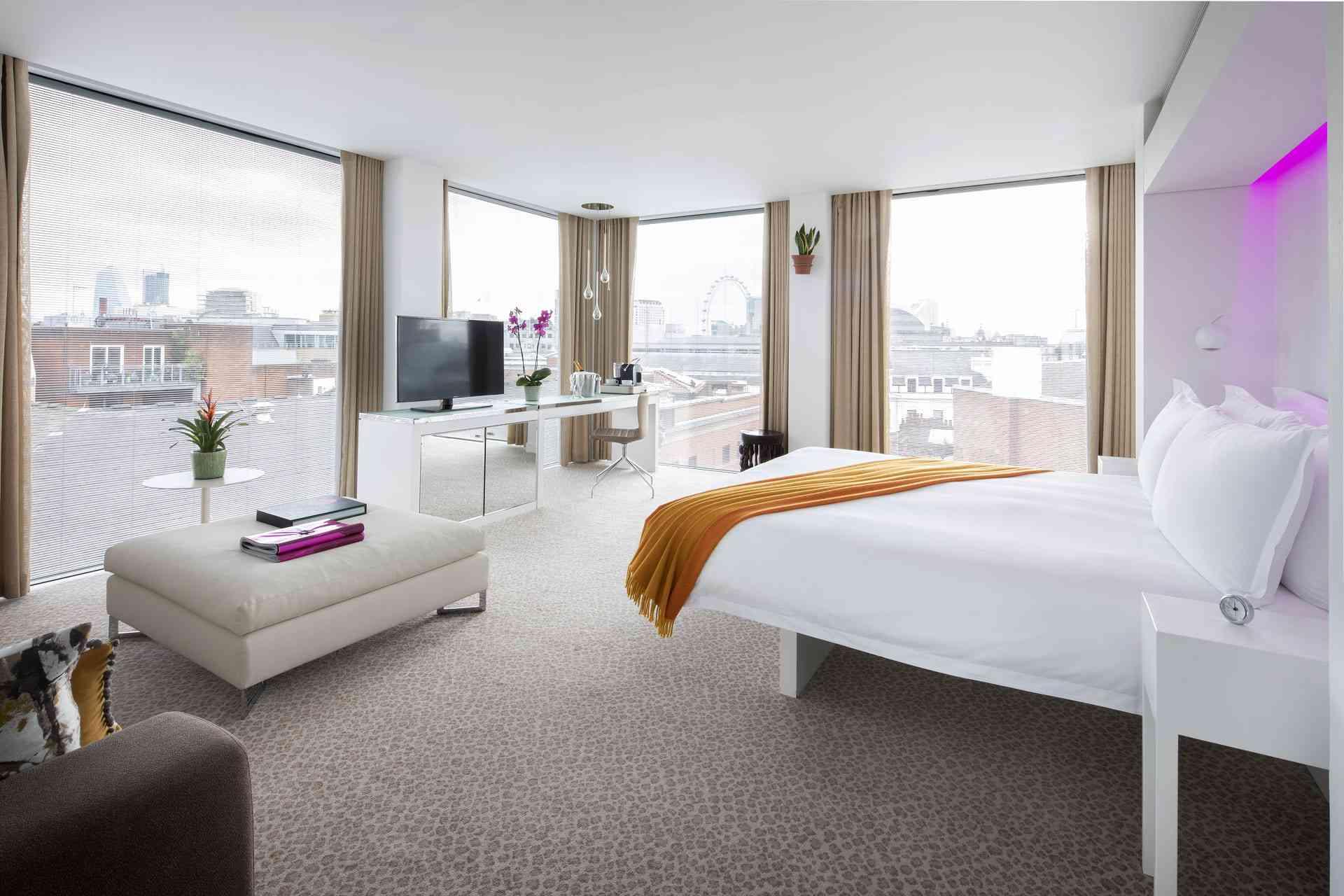
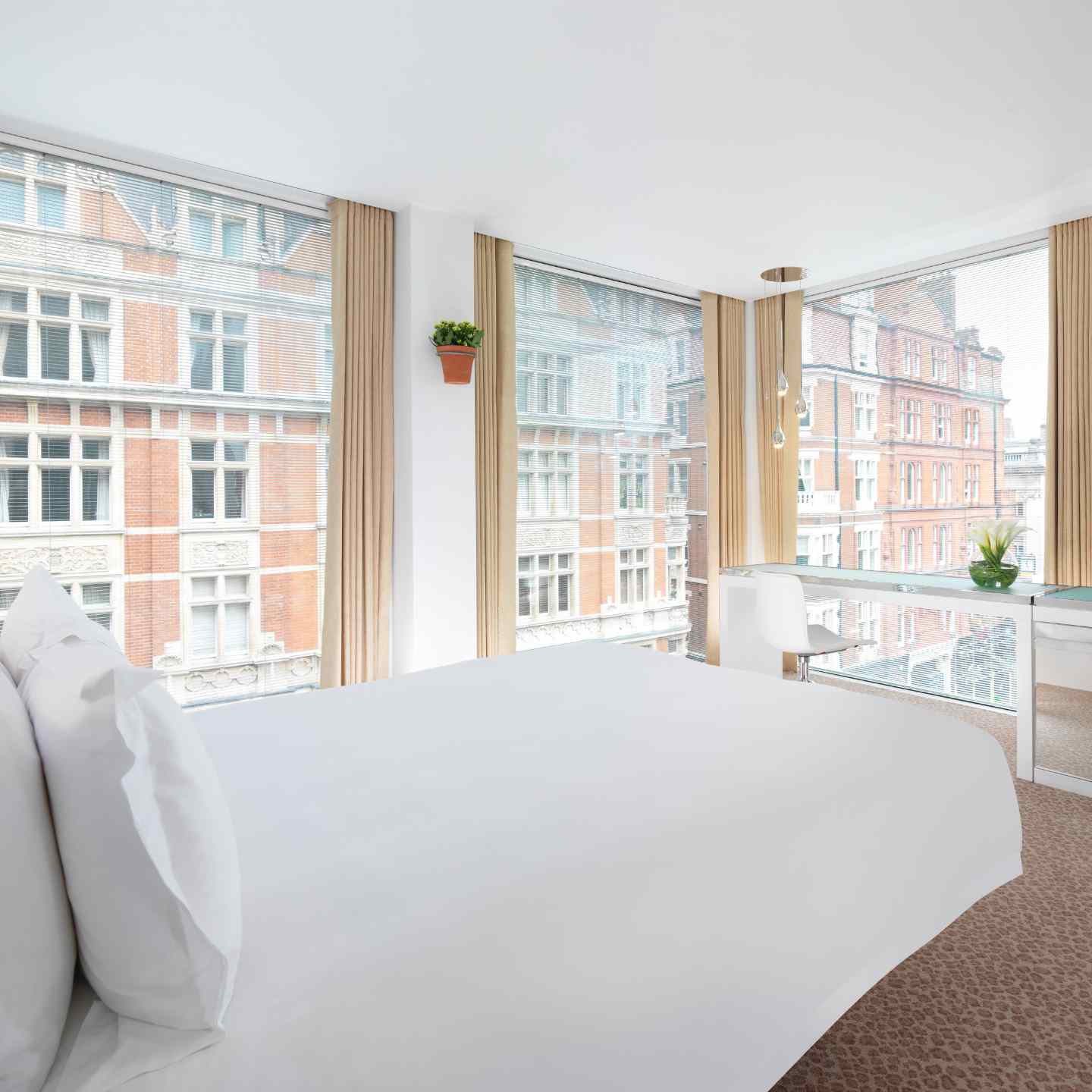
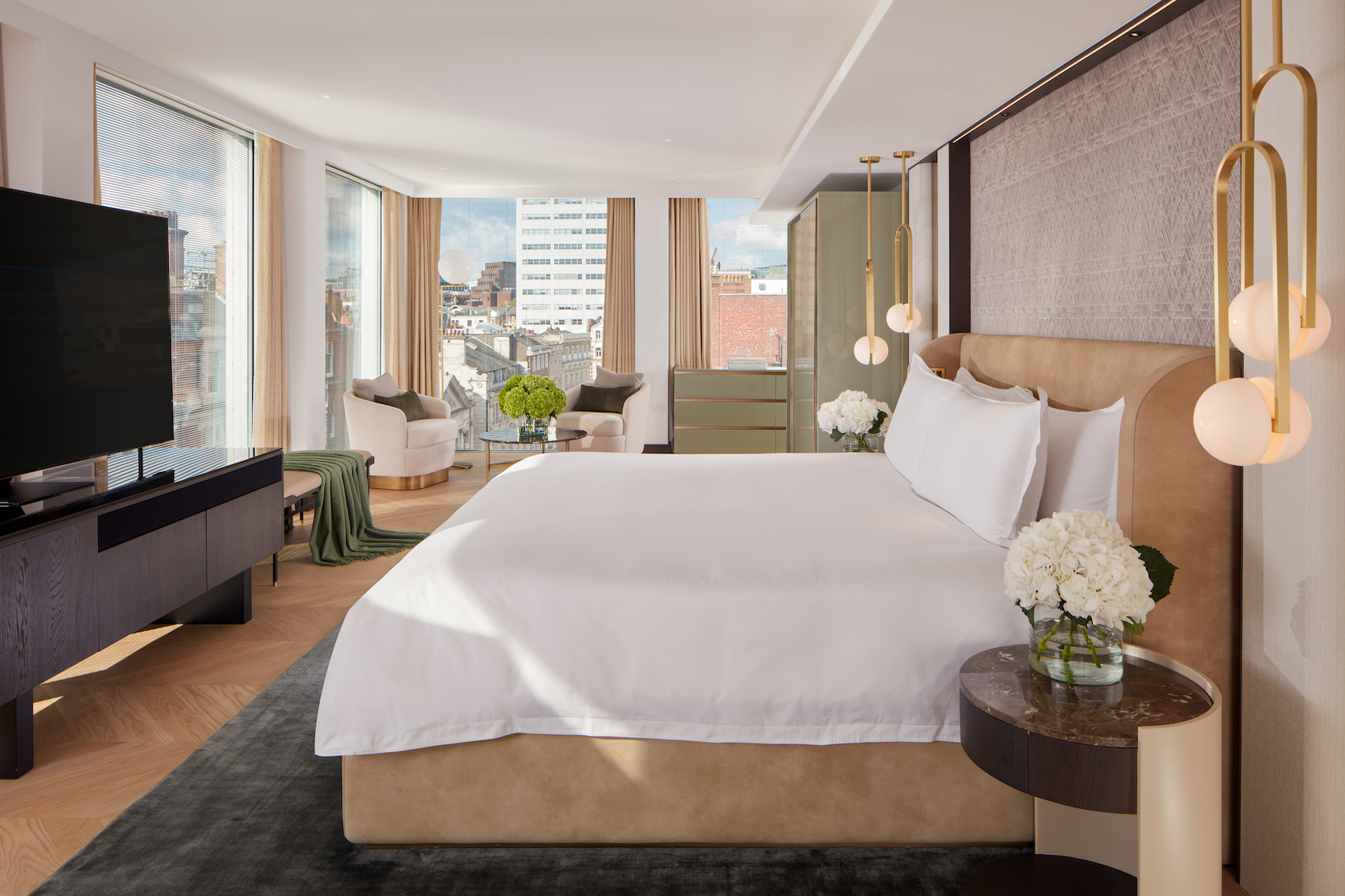
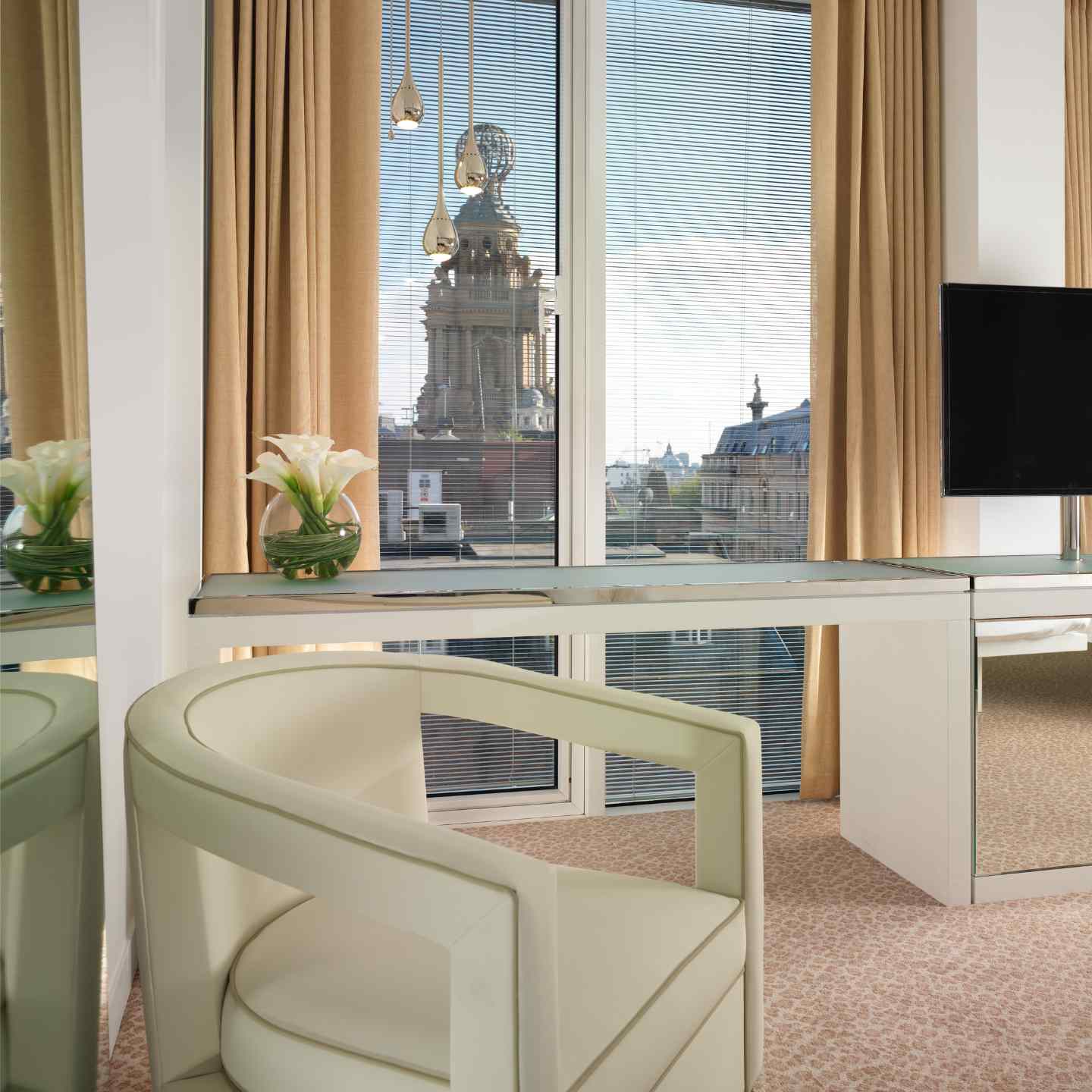
His latest has just opened in London: St Martins Lane, on the western edge of Covent Garden. However much you've read about it in the rising swell of anticipation among the chroniclers of Cool Britannia, your jaw will drop as you walk into the lobby to be confronted by outsized garden gnomes and silver leaf 'teeth' serving as furniture, and a Light Bar where each of a series of divided booths is bathed in a different colour for a different mood.

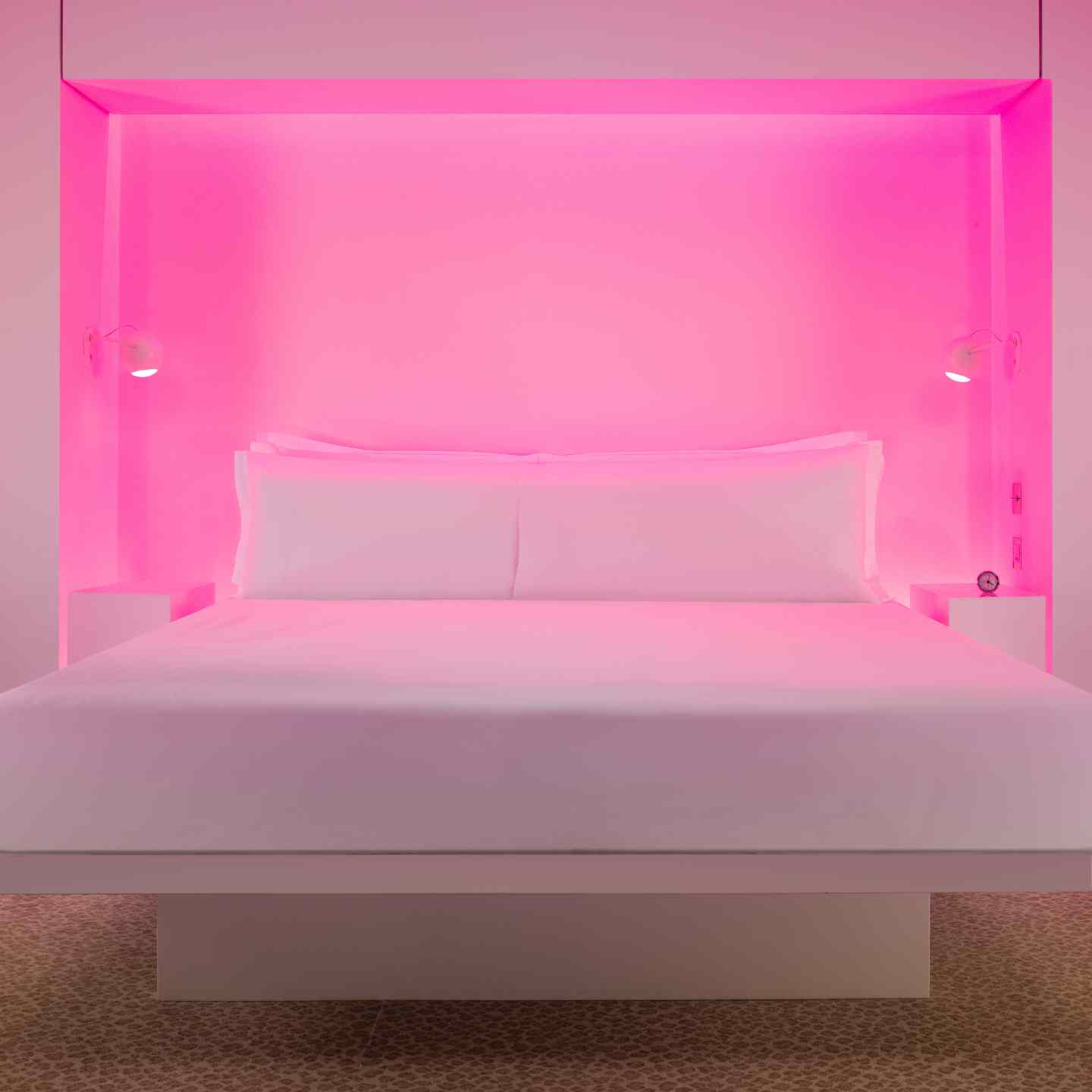
The lighting trick extends to the individual bedrooms, too. St Martins Lane is the first hotel, anywhere, in which guests can select their own lighting tone: amber, green, blue or pink - you name it and a little switching station on the wall will bathe you in it. At night each window overlooking St. Martin's Lane can become a different colour, making the façade an ever-changing 'lightbox'.

'I want to see your eyes go wide and your spirits lift,' says Schrager. 'What we are trying to do is create an experience, make a space where the atmosphere will be so strong you can cut the electricity in the air. People say we are all about design, but that's not quite true. How it feels is more important than how it looks. I want to create an entertainment.'

This is it pretty good sketch of the whole concept of Hotels. There's no mention of gyms for safe cardiac workouts, digital data ports, business offices, corporate discounts and airline free miles bonus perks - nor home from home comfort mattresses and shuttle buses to the airports. These, along with CD players, VCRs and health spas, are simply the basics at St Martins Lane and its stablemates in the States. But we're not here for the convenience; we are here for the destination. 'I am offering a stage', says Schrager. 'How you play on that stage is up to you.' Which makes Schrager the impresario and the stage manager, a role in the back of house where he has always felt most comfortable.

Both Schrager and his hotels are firmly rooted in the business venture of the Seventies that first put his name in headlines: Studio 54, the New York disco that defined its hedonistic era. Bianca Jagger rode in on a white horse. Andy Warhol held court there most nights of the week, and the moguls and celebrities of the rock'n'roll generation pranced on the dance floor in Saturday Night Fevered imitation of John Travolta. Cocaine was sniffed with pre-Aids and crack abandon, and the Velvet Rope was invented to keep the rest of the world out and in its place.

However, the face greeting the line at the rope was not that of Schrager, but of Steve Rubell. Rubell was the 'front man', the visible half of a partnership that saw Schrager spend most of his time in a cramped backroom office as the party roared on just beyond his reach. 'Steve was the extrovert,' Says Schrager. 'He brought the people in, and knew how to get the right people. I had an idea of what we should be doing, and I knew how to run a business. I had the law degree, he knew how to get the girls.'

It all ended in tears. The FBI came knocking in 1978, drawn by tales of sex in the fountain and drugs in the bathrooms. The more exotic charges failed to stick. But Schrager and Rubell were caught on the most basic, and least forgiven, transgression of American enterprise: tax evasion. There were bundles of cash hidden in the dingy back office, and a lot of fast money left unreported to the tax man. Both partners went to jail. Rubell, to Schrager's lasting misery, died of Aids in 1988. 'I'll never have another friend like Steve,' he says. 'I love him. Look what we went through together: school, business, jail.

'Studio 54 was very nearly the ruin of me.' Schrager goes on, 'but it was also the making of me. That is because I found out that when you are doing a nightclub, you are offering the same service as everyone else with a club. It is the something extra, the atmosphere, the magic, that you have to find. And that is exactly what we are doing with the hotels.'

What is more, they are doing it for roughly the same clientele. The more mature of the folks in their loose black Armanis and crisp Pradas, their Versace shorts and Gucci heels, may well have been at Studio 54 on that fabled night of Bianca's birthday bash, and the rest would have been there if only they had been a few years older.

Schrager smiles at the thought as he tosses architectural drawings of his London venture on to a white marble conference table with the practiced ease of a croupier with his cards. We have met in his offices in a converted loft building in the dockland zone of the far west of Manhattan, the sort of place where people in the know go to find the huge white on white space which has become natural Schrager habitat. Behind him is an iconic view of the skyline, with the Empire State Building at dead centre.

'Where do these ideas come from? It's not intellectual, I can tell you that,' he says. 'It's instinctive, it's intuitive. You can't ask people what sort of club or hotel they'd like, because they would describe something they already know. Henry Ford would never have come up with his car from a focus group, you know.

'What I do is what I did with Steve when we decided to do the club, and that is ask the question: what kind of place do I want to go to? From there, it's a balancing act. You want to be outside the box, original, but you don't want to be intimidating.

'There's a sensibility, a group of people who share a sensibility, and I'm lucky to have been in the right place at the right time and to have found people who share my sensibility.'

Schrager compares this to his friend Peter Morton's brainwave with the first Hard Rock Cafe, opened in London because Morton, an American, was pining for a proper, Chicago broiled hamburger. It is a knack of identifying a personal taste which is in harmony with a generation or a group, and having the chutzpah to invest in it before the customers even realize that they have a yen for period Americana or apparently emotionless monochrome bedrooms.

A drawing of St Martins Lane's Sea Bar, one of its three restaurants, lands on the table, showing a waiter standing at the centre of a huge, oval bar piled high with seafood chilled on mounds of ice. Schrager has had the idea of giving the waiter a silver plated 'shovel', six feet long, with which he can select and serve the oyster or the shrimp according to each demand. 'The drama of it!' says Schrager. 'A guy ordering each piece, and the waiter serving it with the giant silver shovel!'

His marketing men talk of a customer base in an international tribe of trendsetters and buzz makers, from rockers and film stars to magazine editors and writers, from divorce lawyers to their celebrity clients and their plastic surgeons. The tribe travels a circuit, which includes London, Paris, Milan, New York, Los Angeles and Miami, and it is in all these cities that Schrager hotels may one day be found. A supermodel - Kate Moss's passion for Johnny Depp was played out at the Royalton - could then do all the shows, see her movie agents and take a beach holiday without ever having to leave the psychic womb of the ultra trendy.

But Schrager doesn't like the word 'trend'. It makes him suspicious. Trends are things created by magazines rather than discovered by them, and they do not last. He opened the first of his hotels - Morgans - in the mid-Eighties, when Rubell was still alive, and he hopes they will keep for another generation or two.

'I think people come because we share a culture, and it is a culture that began, like the revolution in fashion of the Sixties, on the streets,' he says. 'A trend is superficial, but this is not. That is why my first hotel in a foreign country is in London, because I understand British culture. We all grew up on the Beatles and the Rolling Stones.

'It is this that people at my hotels have in common. They are not all that expensive [St Martins Lane prices start at a relatively modest £125 a night], and I don't think that in our gilded age of prosperity that money is status. Being in the know is the ultimate status now.'

The extremes of design are not for everyone. Stepping into Miami Beach's Delano, with its distorted scale lobby of billowing drapes, oversize chairs and old iron beds, can make you feel like Alice in Wonderland falling down the rabbit hole. In one of their all white bedrooms, I once threw back the curtains just as my girlfriend opened her eyes, and the result was a blinding headache. The lobby of the Royalton is the setting for Brian McNally's Restaurant 44, known for years as the CondÈ Nast Canteen, the lunch spot of Tina Brown, Vanity Fair's Graydon Carter and all their acolytes - but it is also home to surely the strangest pissoir ever designed, a minimalist statement so extreme that gentlemen find it notoriously difficult to know in which direction to point.

Nevertheless the numbers on the bottom line testify to the market for the 'social lobby' and the 'hotel as theatre'. Occupancy rates are as high as 90 per cent, and those velvet ropes admit only the most select to the hotel bars, including the Sky Bar in Mondrian, run by Cindy Crawford's husband, Rande Gerber. The niche is coining profit and expanding. A second London hotel - the Sanderson in Soho - is next up, three more are being renovated in New York, and there are talks with potential partners in Paris, Berlin and Milan.

'I'm driven, I'm a very hard worker, and I know I've got something to prove, although I'm not sure what it is,' says Schrager. 'I'll stop when I no longer get the big kick out of it, when the passion goes.

'Doing this is like writing a novel. If you try to write a bestseller, it'll be rubbish and no one will buy it. If you write a really good book because you want to write it, then you'll have your bestseller.'

There are no signs yet of the passion going. A young family - he has married Cuban born ballet dancer Rita Norona, and they have two daughters, Sophie, five, and Ava, two - offers the first intimation that he may be ready to slow down. 'For the first time in my life,' he says, 'I am getting gratification from something other than business.'

Nevertheless, business still takes up about 70 hours a week. Schrager's next ambition is to turn himself into a brand. It might be time to become a mogul. After all, even the guerrilla capitalists of Studio 54 have to grow up, and Schrager as the next, improbable Conrad Hilton would certainly prove something to the cops and the taxmen, the 'establishment', which so nearly brought him down. 'You have to grow into each stage of life,' he says, 'or it's unseemly. Like a woman wearing a dress that's too young for her.' That idea, it occurs to me, might just apply one day to Hotels. But probably not before strange lobbies, steel sinks and multi-coloured lighting options seem quite normal. And not before we have recognized the face behind the fuss.


back to top

MHG Luxury Hotels | About Us | Site Map | Contact Us | Policies | Copyright © 2004-2008 Morgans Group LLC.
Morgans New York Hotel | Royalton New York Hotel | Hudson New York Hotel
Delano South Beach Hotel | The Shore Club Miami Hotel | Mondrian South Beach Hotel | Mondrian Los Angeles Hotel
Clift San Francisco Hotel | Mondrian Scottsdale Hotel | St Martins Lane London Hotel | Sanderson London Hotel